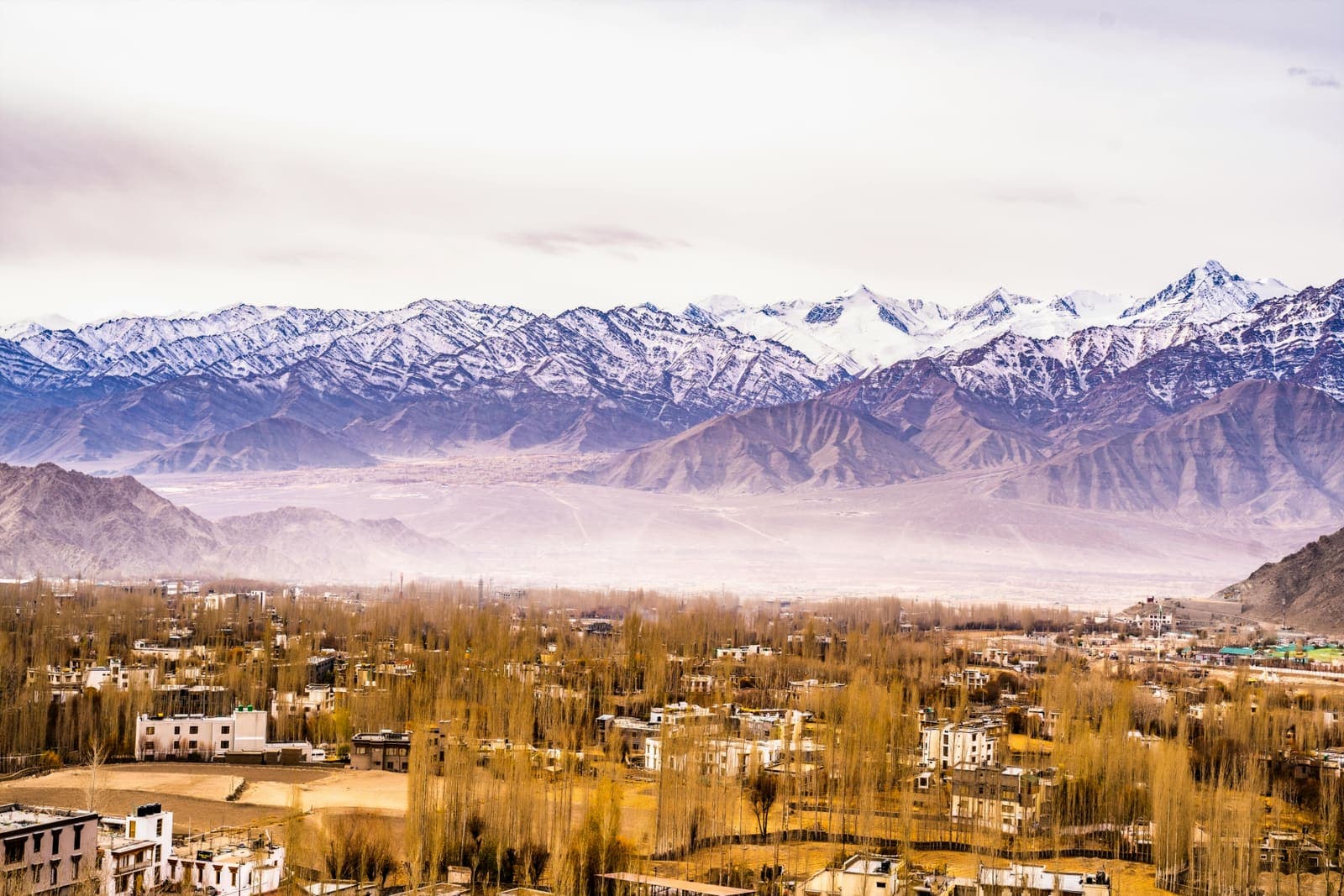
The global market for wild-harvested botanicals, herbs, spices, resins, and medicinal plants collected from forests and natural ecosystems rather than cultivated farms, is growing rapidly. India alone is home to over 8,000 species of medicinal plants, and is one of the world's largest exporters of non-timber forest products (NTFPs). Brands from Europe, the US, and Asia are increasingly sourcing these ingredients to meet consumer demand for "natural" and "wild" products.
But there's a problem hiding behind those labels.
The Supply Chain No One Can See
A typical wild-harvest supply chain might look like this: A harvester in a remote forest collects plants by hand. They sell to a local trader. That trader consolidates with other traders. The material moves to a regional aggregator. Then to a processor. Then an exporter. Then an importer. Then a brand. Then a retailer. Finally, a consumer.
That's eight or more handoffs, each one a potential point where information gets lost, diluted, or fabricated. By the time a product reaches a shelf, its origin is often little more than a country of origin stamped on an invoice. The actual forest, the actual community, the actual harvesting practices, gone.
The Adulteration Problem Is Bigger Than You Think
A 2019 DNA-barcoding study published in Frontiers in Pharmacology examined nearly 6,000 commercial herbal products across 37 countries. It found that 1 in 4 were adulterated, containing undeclared substitute species, fillers, or in some cases none of the ingredient listed on the label at all. For India specifically, the adulteration rate was 31%.
This isn't a fringe problem. It's systemic. And it's enabled by the invisibility of the supply chain.
Why "Wild-Sourced" Is Especially Vulnerable
Cultivated crops at least have farms, fixed locations with traceable ownership. Wild-harvested products come from forests, hillsides, and riverbanks that span vast, often remote geographies. There's no single farm address to verify. No centralised growing record. The only record is what harvesters and traders choose to write down, which is usually very little.
This makes it easy for lower-quality materials to be passed off as premium wild-sourced ingredients. It also makes it impossible for brands to verify the sustainability claims they're making to consumers. "Sustainably wildcrafted" is a claim that currently rests almost entirely on trust.
What Regulators Are Starting to Demand
This is changing. The EU Deforestation Regulation (EUDR), which came into force in 2023, requires companies placing certain commodities on the EU market to prove their products are deforestation-free, with verifiable geographic data. The EU Corporate Sustainability Due Diligence Directive (CSDDD) extends this to human rights and environmental impacts across the supply chain.
For brands sourcing wild-harvested ingredients, "we trust our supplier" is no longer a sufficient answer. Regulators are asking for documentation. Buyers are asking for documentation. And consumers, increasingly, are asking for documentation too.
What Needs to Change
The solution isn't just better paperwork, it's digital, real-time capture of supply chain events at the source. GPS-tagged harvest logs. Digital quality records. Immutable transfer documentation at each handoff. A chain of evidence that travels with the product, not behind it.
This is exactly what blockchain-based traceability systems like WyldTrace are built to provide. Not to replace the harvesters or the traders, but to give every step of their work a permanent, verifiable record, so the brand, the buyer, and the consumer can see what actually happened.
The wild-harvest supply chain doesn't need to be invisible. It just needs the right infrastructure to make it visible.
Sources:
Ichim MC et al. "The DNA-Based Authentication of Commercial Herbal Products." Frontiers in Pharmacology, 2019. Link
European Commission. EU Deforestation Regulation (EUDR), 2023. Link